

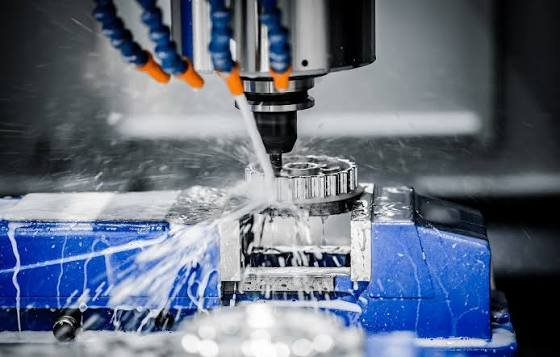
A Complete Guide to Choosing the Right CNC Machining Services
Choosing the right CNC machining provider can have a major impact on the quality, cost, production speed, and overall success of a manufacturing project. Whether you need a single prototype, a small batch of components, or large-scale production, selecting a reliable machining partner is an important decision. With many suppliers offering different capabilities, technologies, materials, and pricing structures, it can be difficult to determine which option is best for your requirements.
CNC machining services use computer-controlled equipment to manufacture precise components from materials such as aluminium, steel, stainless steel, brass, copper, titanium, and engineering plastics. Because the process can produce highly accurate and repeatable parts, it is widely used in industries including aerospace, automotive, medical equipment, electronics, robotics, and industrial manufacturing.
Understanding what to look for before choosing a supplier can help you avoid costly mistakes and ensure that your components meet the required specifications.
Understand Your Machining Requirements
The first step in choosing suitable CNC machining services is to clearly understand your project requirements. Before contacting manufacturers, identify the type of component you need, the material, required dimensions, tolerances, quantity, surface finish, and expected delivery date.
You should also determine whether you need CNC milling, CNC turning, drilling, threading, boring, or a combination of different processes. Some projects may require additional services such as anodizing, powder coating, polishing, heat treatment, or surface finishing.
Having detailed specifications allows machining companies to provide more accurate quotations and helps you compare suppliers fairly.
Consider the Material
Material selection is an important part of CNC manufacturing. Different materials have different machining characteristics, strength levels, corrosion resistance, weight, and costs.
For example, aluminium is often selected for lightweight components, while stainless steel may be preferred for applications requiring strength and corrosion resistance. Titanium can be useful for demanding aerospace and medical applications, although it generally requires specialized machining capabilities.
Make sure the manufacturer you choose has experience working with your specific material and understands the appropriate cutting tools, speeds, feeds, and machining techniques.
Evaluate CNC Machine Capabilities
Not every CNC machining company has the same equipment or production capabilities. A supplier may specialize in simple three-axis milling, while another may operate advanced five-axis machines capable of producing highly complex geometries.
Review the manufacturer’s available equipment before making a decision. Consider factors such as machine size, number of axes, spindle capabilities, machining tolerances, and automation.
For complex components, five-axis machining can reduce the need for multiple setups and improve accuracy. For simpler components, three-axis or four-axis machining may provide a more economical solution.
The supplier should also have equipment suitable for the dimensions of your parts. A manufacturer with excellent precision may still be unsuitable if its machines cannot accommodate your required component size.
Check Quality Control Procedures
Quality should be one of the most important factors when selecting CNC machining services. A component that does not meet its required dimensions can cause assembly problems, product failures, or expensive production delays.
Ask potential suppliers about their quality control systems. Find out how they inspect incoming materials, monitor production, and verify finished components.
Professional manufacturers may use equipment such as coordinate measuring machines, digital calipers, micrometers, height gauges, optical measurement systems, and other inspection tools.
You should also ask whether inspection reports or certificates of compliance are available when required. A strong quality assurance process demonstrates that the manufacturer takes consistency and accuracy seriously.
Review Experience and Industry Knowledge
Experience can make a significant difference, especially when manufacturing complicated or highly precise components. A company that has worked with similar products or industries is more likely to understand common challenges and provide useful recommendations.
Look for CNC machining services with experience relevant to your application. Aerospace, medical, automotive, and industrial components may have different requirements regarding tolerances, documentation, materials, and quality standards.
Ask potential suppliers about previous projects and the types of components they commonly manufacture. Their experience can help you determine whether they are capable of handling your project successfully.
Examine Technical Support
A good CNC machining partner should do more than simply manufacture parts. Technical support can be extremely valuable during the design and production process.
Experienced manufacturers may identify design issues before production begins and recommend modifications that improve manufacturability. This process is commonly known as design for manufacturability, or DFM.
For example, a manufacturer may suggest changing an unnecessarily deep pocket, adjusting a sharp internal corner, modifying wall thickness, or selecting a more practical tolerance. Such recommendations can reduce machining time and manufacturing costs without compromising the intended function of the component.
Compare Pricing Carefully
Price is naturally an important consideration, but the lowest quotation is not always the best choice. Extremely low pricing can sometimes indicate limitations in quality control, equipment, material sourcing, finishing, or customer support.
When comparing quotations, make sure each supplier is pricing the same specifications. Check whether the quote includes material, machining, finishing, inspection, packaging, shipping, and other required services.
You should also consider the total cost of production rather than only the initial unit price. A supplier offering slightly higher prices but better quality and fewer rejected parts may ultimately be more economical.
For larger production runs, ask whether volume discounts are available. Some manufacturers can reduce unit costs significantly when production quantities increase.
Consider Production Capacity and Lead Times
A manufacturer may be technically capable of producing your component but still be unsuitable if it cannot meet your production schedule.
Ask about current capacity, estimated lead times, prototype availability, and production scheduling. If your project is time-sensitive, confirm the expected delivery date before placing an order.
It is also useful to understand how the supplier handles urgent orders. A manufacturer with flexible production planning may be able to accommodate unexpected increases in demand more effectively.
For recurring projects, choose a supplier with sufficient capacity to support future orders as well as the initial production run.
Review Communication and Customer Service
Clear communication is essential throughout a manufacturing project. A reliable CNC machining company should respond to questions promptly and provide clear information about pricing, technical requirements, production progress, and delivery.
Pay attention to how a supplier communicates during the quotation stage. If they ask detailed questions about your drawings, materials, tolerances, and application, it can be a positive sign that they are carefully evaluating the project.
Poor communication can create misunderstandings that result in incorrect parts, delays, or unexpected costs. Choosing a manufacturer that provides professional customer service can make the entire process much smoother.
Verify Certifications and Standards
Depending on your industry, certifications may be an important requirement. Some projects require suppliers to follow specific quality management standards or industry regulations.
Ask whether the manufacturer holds relevant certifications and whether those certifications apply to the facility producing your components. You may also need documentation related to material traceability, inspection results, or production processes.
For highly regulated industries, verifying these requirements before production can prevent serious problems later.
Consider Prototyping and Scalability
If you are developing a new product, it is often beneficial to work with a manufacturer capable of producing both prototypes and production quantities.
A supplier that can support the project from initial prototype through mass production can make the transition easier. The manufacturer already understands the design, materials, and production requirements, which may reduce the need to transfer the project to another supplier.
Ask whether the company supports low-volume manufacturing, prototype development, and larger production runs. This is particularly important for businesses expecting product demand to grow.
Finalize the Right CNC Machining Partner
Choosing the right CNC machining services requires more than comparing prices. You should evaluate machining capabilities, material expertise, quality control, technical support, production capacity, communication, certifications, and delivery performance.
Start by defining your project requirements clearly. Then compare several qualified suppliers using the same specifications. Request detailed quotations and ask questions about equipment, inspection processes, tolerances, materials, and lead times.
The right manufacturing partner should provide consistent quality while offering practical technical guidance and dependable service. By carefully evaluating potential suppliers before production begins, you can reduce manufacturing risks, control costs, and build a stronger foundation for successful product development.
A reliable CNC machining provider is not simply a company that operates machines. It is a manufacturing partner that understands your requirements, communicates clearly, maintains quality standards, and can support your project as it develops. Taking the time to choose carefully can lead to better components, smoother production, and long-term manufacturing success.