



Residential IP: Understanding Its Benefits, Uses, and Importance
Introduction
In today’s digital world, internet connectivity plays an essential role in communication, business operations, online shopping, research, and entertainment. As more activities move online, privacy, security, and reliable access to websites have become increasingly important. One technology that supports these needs is a Residential IP. It provides an internet address associated with a residential internet connection, making it useful for individuals, businesses, researchers, and digital professionals.
Residential IPs are widely used for legitimate activities such as market research, website testing, localized content verification, and accessing online services while traveling. Understanding how they work and what benefits they offer can help users choose the right internet connectivity solution for their needs.
What Is a Residential IP?
A Residential IP is an internet protocol address assigned to a device through a residential internet service provider. Unlike many data center IP addresses, which originate from commercial server infrastructure, residential IP addresses are associated with internet connections commonly used in homes.
Every device communicating over the internet uses an IP address to send and receive data. Websites and online services can use this information to identify the network from which a request originates. A residential IP typically appears to come from an ordinary household internet connection rather than a hosting server.
Residential IP services may provide access to IP addresses through authorized networks, depending on the provider’s technology and business model. These services can support different locations, connection types, and usage requirements.
However, a residential IP does not automatically make a user anonymous or completely secure. Other information, including account activity, browser settings, cookies, and device characteristics, may still be used to identify a session.
How Does a Residential IP Work?
A residential IP works through the internet connection provided by a residential internet service provider. When a household connects to the internet, the provider assigns an IP address to its connection or network.
When a user visits a website, their request travels through the internet using that address. The website receives the request and may examine the IP address to estimate the user’s geographic location, determine the network provider, or apply security checks.
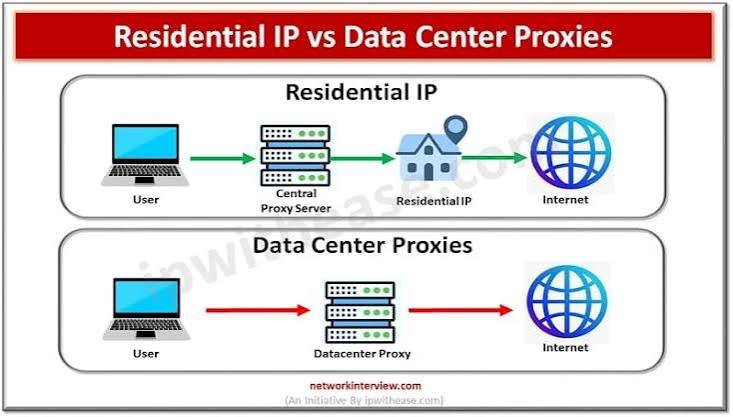
Residential IP services can also operate through authorized proxy networks. In this arrangement, a user’s internet request passes through an intermediary connection associated with a residential IP address before reaching its destination.
Depending on the service, users may be able to select a country or region, maintain a session for a particular period, or use different residential endpoints. Available features vary between providers.
A reliable service should explain how its residential network obtains IP addresses, how consent is handled, and what restrictions apply to its use.
Residential IP vs. Datacenter IP
Residential IPs and datacenter IPs serve similar basic purposes, but they originate from different types of networks.
A residential IP is associated with a residential internet service provider, while a datacenter IP generally belongs to a hosting company or server infrastructure provider.
Residential IPs can be useful when a task requires testing a website from a typical household connection. Datacenter IPs may be more suitable for applications that prioritize speed, predictable infrastructure, or large-scale server operations.
Residential connections can offer more representative geographic and network conditions for certain testing tasks. However, their performance may vary depending on the provider, connection quality, and network congestion.
Datacenter connections can provide stable performance for many technical workloads, although some websites apply additional checks to traffic originating from hosting networks.
Neither option is universally better. The appropriate choice depends on the intended activity, technical requirements, budget, and the policies of the website being accessed.
Key Benefits of Residential IP
1. More Representative Location Testing
Businesses frequently need to understand how their websites appear to customers in different regions. A residential IP associated with a particular location can help teams test localized pages, regional promotions, language settings, and market-specific content.
This allows developers and marketers to identify inconsistencies that might not appear when testing exclusively from their own office network.
2. Support for Market Research
Market researchers may use residential IP connections to observe regional differences in product availability, website presentation, and online shopping experiences.
For example, an organization expanding into a new country might need to compare how its website presents shipping information or regional product catalogs. Responsible testing can help the business understand customer experiences across markets.
Researchers should respect website terms, privacy requirements, and restrictions on automated data collection.
3. Website Quality Assurance
Website developers need to verify that applications work correctly across different internet environments. Residential IP connections can help simulate visits from ordinary household networks.
Testing may include checking page loading, authentication workflows, regional redirects, and the behavior of location-sensitive features.
By testing from multiple environments, development teams can discover issues that might otherwise affect customers after a website update.
4. Flexible Internet Connectivity
Some residential IP services offer access to multiple locations or different session configurations. This flexibility can help organizations conduct approved testing without maintaining separate physical internet connections in every region.
The available options depend on the service provider and the type of residential network being used.
5. Better Visibility Into Regional Experiences
Online platforms may display different information depending on location. Residential IPs can help businesses understand these differences when evaluating their own services or conducting authorized research.
This can be particularly useful for companies that operate internationally and want to ensure their content, customer support information, and regional settings are accurate.
Common Uses of Residential IP
Residential IP technology supports a variety of legitimate professional and personal activities.
E-commerce testing: Online retailers can check regional pricing displays, shipping options, product availability, and localized checkout experiences.
SEO and digital marketing research: Marketing teams can investigate regional search experiences, review localized website layouts, and assess how their own content appears to users in different markets.
Ad verification: Advertisers can confirm whether their campaigns appear correctly in intended locations and identify discrepancies in approved advertising placements.
Software development: Developers can test applications under different network conditions and investigate problems that affect users connected through residential internet providers.
Travel and remote work: Individuals may use privacy or connectivity services while traveling, subject to applicable laws and the terms of the services they access.
Cybersecurity testing: Authorized security teams can evaluate website defenses and investigate how their own systems respond to requests from different network environments.
Each application should have a clear purpose and comply with applicable privacy laws, service agreements, and security policies.
Factors to Consider When Choosing a Residential IP Service
Selecting a residential IP provider requires more than comparing advertised prices. Several important factors can influence reliability, privacy, and overall value.
Network Quality and Reliability
Look for a provider that explains its network coverage, expected availability, and performance limitations. Stable connections are especially important for website testing and business applications that require consistent results.
Geographic Coverage
Check whether the service supports the countries or regions relevant to your work. Geographic availability can differ significantly between providers, so confirm that the advertised locations meet your actual requirements.
Privacy and Security
Review the provider’s privacy policy, data retention practices, security controls, and account protection features. Avoid services that cannot explain how they obtain residential IP addresses or whether network participants have provided appropriate consent.
Pricing and Usage Limits
Residential IP services may charge according to bandwidth, usage duration, connection type, or subscription level. Compare the total cost with your expected workload rather than choosing solely on the basis of a low starting price.
Customer Support
Responsive support can help resolve connection problems, configuration issues, and account questions. Documentation and transparent service policies are also useful when integrating residential IPs into a business workflow.
Are Residential IPs Safe to Use?
Residential IPs can be part of a safe and responsible internet setup, but safety depends on how the service operates and how users employ it.
A residential IP does not replace encryption, secure passwords, multifactor authentication, or good cybersecurity practices. Users should continue to protect sensitive information and verify that the services they access use secure connections.
It is also important to choose providers that obtain network access transparently and lawfully. Some questionable services may use devices or internet connections without proper authorization. Understanding the provider’s sourcing practices helps reduce the risk of privacy violations and unexpected security problems.
Users should avoid activities that violate website rules, compromise accounts, or interfere with other people’s systems. Businesses should establish clear policies for data collection and authorized testing before deploying residential IP technology.
The Future of Residential IP Technology
As online businesses expand internationally, demand for reliable regional testing and network diversity is likely to remain important. Residential IP technology may continue to support website quality assurance, digital advertising verification, e-commerce research, and cybersecurity assessments.
At the same time, websites are improving their systems for detecting suspicious traffic and protecting user information. Providers and customers will therefore need to prioritize transparency, legitimate network sourcing, and responsible data practices.
Future developments may also focus on better performance monitoring, improved privacy controls, and clearer reporting about how residential networks operate.
Businesses that adopt these technologies thoughtfully can benefit from useful testing capabilities while maintaining respect for online security and user privacy.
Conclusion
A Residential IP is an internet address associated with a residential internet connection. It can help individuals and businesses evaluate localized website experiences, conduct market research, verify advertising, test software, and investigate network-related issues.
Its value depends on choosing a trustworthy provider, understanding the differences between residential and datacenter connections, and selecting a service that matches the intended purpose. Security, transparency, geographic coverage, and pricing should all be considered before making a decision.
When used responsibly, Residential IP technology can be a practical tool for understanding how websites and online services behave across different regions and residential networks.